

Hong Kong Insider Tips: 26 Secrets for First-Time Visitors
After hundreds of tours, I can spot a first-time visitor from fifty metres — standing in the wrong queue at the Peak Tram, paying tourist prices, sweating in the midday sun on the wrong side of the harbour. This city is wonderfully easy once you know its secrets. So here are mine: the tips I give every one of my guests before we even start walking.
Getting Around Like a Local
1. Skip the physical Octopus card. If you have an iPhone or Android phone, download the Octopus App for Tourists before you fly; you can then add a virtual Octopus to your phone wallet and top it up with your foreign credit card. It works on the MTR, buses, ferries, trams, at 7-Eleven and in most shops. When you leave, refund the deposit and balance straight from the app. No queuing at airport counters. Download it: App Store · Google Play.
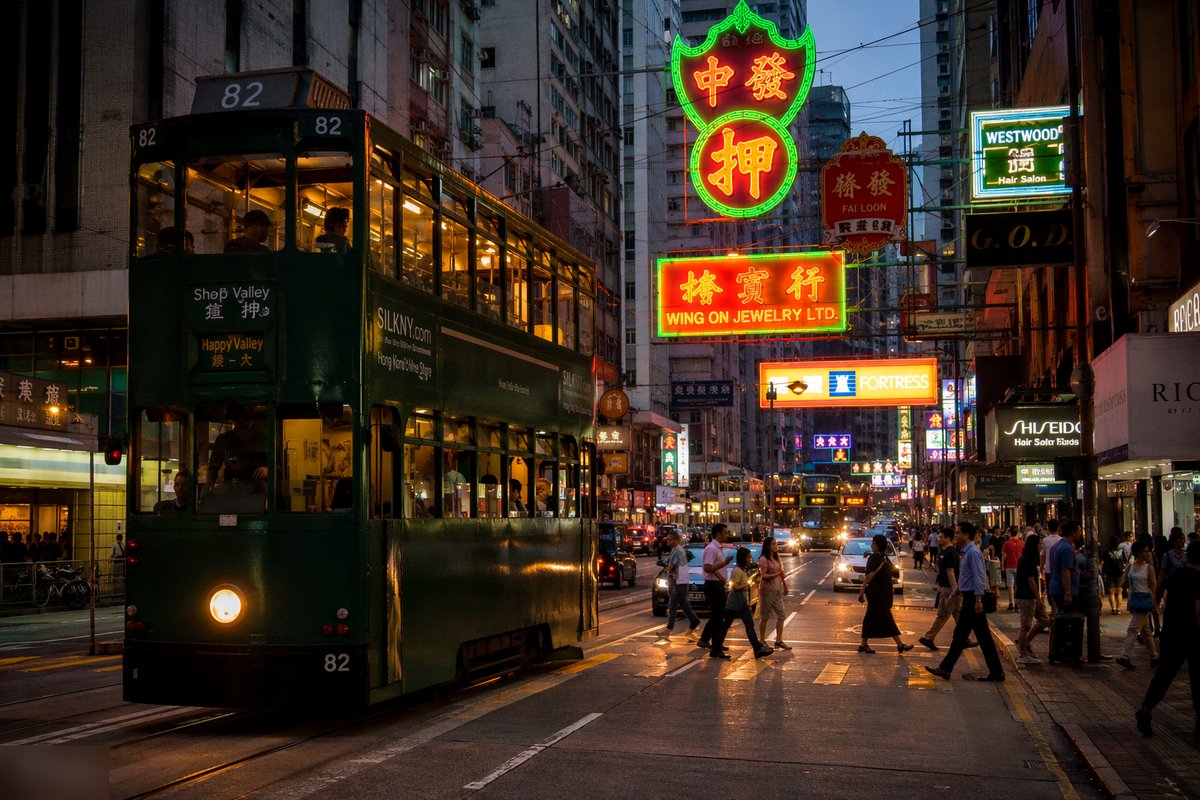
2. The ding-ding tram is one of the cheapest sightseeing rides in the world. For just HK$3.30 (≈ US$0.40 · €0.35 · £0.30) — about US$0.40 or €0.35 — you ride a 120-year-old double-decker tram along Hong Kong Island. Grab the front seat upstairs and let the city roll past — better than any tour bus, and it costs less than a coffee.
3. Know your taxi colours. Red taxis serve the city (about 15,000 of them), green ones the New Territories (under 3,000), and blue ones Lantau Island only — all 75 of them. Yes, seventy-five. A blue taxi cannot take you to Central, and from the airport to the city you always want a red one. Save yourself the argument. One more thing about taxis: cash is king, and Hong Kong dollars only. Maybe one in a hundred drivers takes a credit card, and perhaps half accept Octopus — if you're lucky. Have small notes ready.
4. Minibuses: green follows routes, red follows moods. Green minibuses run fixed routes and take Octopus. Red minibuses are the wild west — flexible routes, and many still prefer cash. On both, you must call out your stop — the driver won't stop otherwise. My tip: watch locals on your first ride before trying it alone.
5. Never eat or drink on the MTR. The fine is HK$2,000, and they actually enforce it. Finish your milk tea before the gates. Speaking of fines: littering costs around HK$3,000, smoking where it's prohibited around HK$1,500, jaywalking can be fined too, and feeding wild animals — including feral pigeons — now carries a HK$5,000 penalty. And here's the mystery every first-time visitor comments on: there are surprisingly few public bins, yet the streets are spotless.
The Peak — Without the Two-Hour Queue
6. My golden rule: taxi up, tram down. The Peak Tram queue can eat two hours of your holiday going up. Take a taxi to the top instead (it's affordable and scenic), enjoy the views, then ride the tram down — the downward queue is almost always short.
7. Right side going up, left side coming down. The skyline views are on the right-hand side as the tram climbs. Heading back down, sit on the left side facing the city. Wrong side? Mostly bushes. And if you must queue: buy tickets online in advance — the fast-track option pays for itself in saved holiday time.
Lantau — Do It Backwards
8. Everyone goes Big Buddha first, Tai O second. Do the reverse. Take the morning bus or taxi straight to Tai O fishing village — quiet canals, empty photo spots, relaxed boat rides. Then visit the Big Buddha in the afternoon, when the tour groups have left. Same sights, half the crowds.
9. Cable car: book a Crystal or Crystal Plus cabin online, and arrive well before opening time. You'll still queue — but far less than the standard line. By late morning on weekends, you're queueing with half of Hong Kong.
Harbour Views & Skyline Secrets
10. Take the Star Ferry's lower deck. It's a few cents cheaper than the upper deck, there are no steps to navigate, the photos from water level are better — and you can peek into the open engine room and watch the old machinery puffing away. Yes, it smells faintly of diesel and history. That's exactly why I love it. This is how Hong Kong commuters crossed the harbour for over a century.
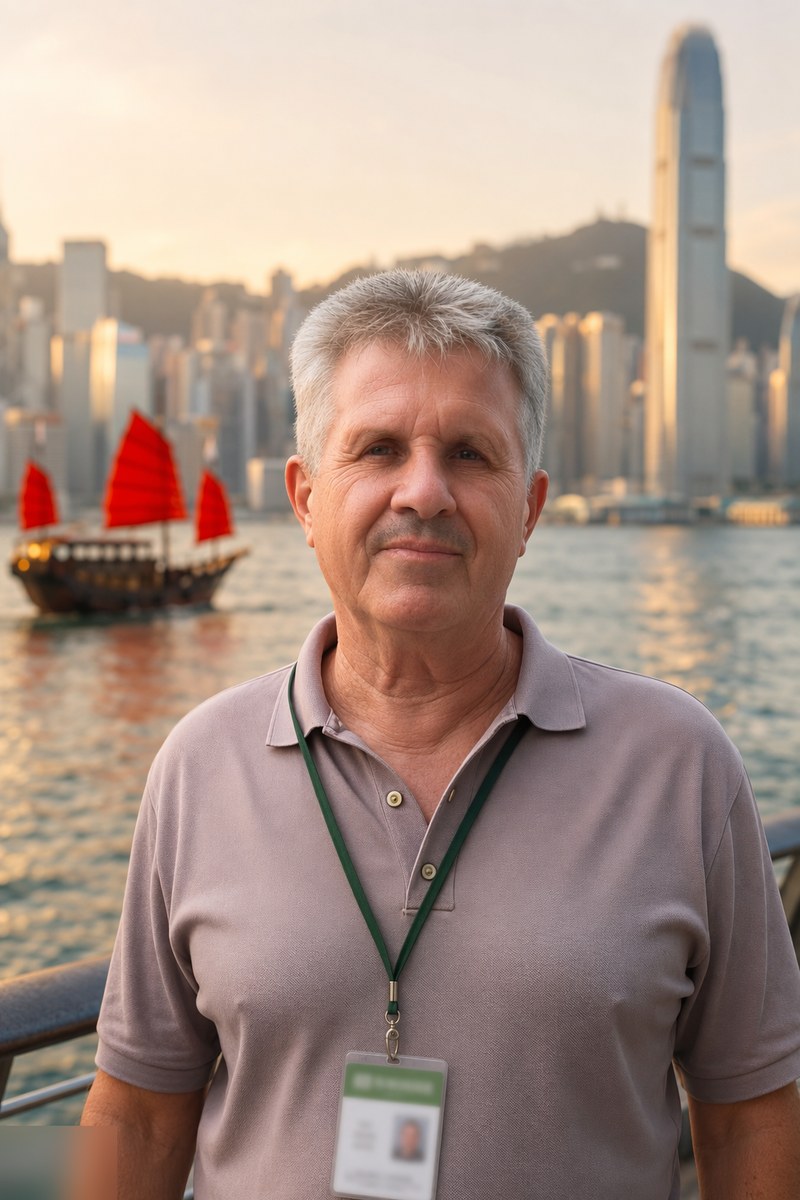
11. Watch the Symphony of Lights from the water. The 8 pm light show is nice from the Tsim Sha Tsui waterfront — but from a harbour cruise it's unforgettable. The authentic choice is the Dukling, Hong Kong's last original sailing junk; the red-sail Aqua Luna boats are the comfortable alternative.
12. The skyline bar secret: Eye Bar, not Ozone. Everyone knows Ozone at the Ritz-Carlton — spectacular, 118 floors up, and priced accordingly with a steep minimum charge. My insider tip: the Eye Bar on the 30th floor of iSquare in Tsim Sha Tsui. Wraparound harbour views, Island skyline in full glory, and drink prices that won't hurt. You can even peek across into The Peninsula's famous Felix bar — including its legendary men's room with floor-to-ceiling harbour view. The men can watch us enjoying our beer, and we can watch them. Hong Kong nightlife has a sense of humour.
Money & Payments
13. One currency, three designs. Hong Kong banknotes are issued by three different banks (HSBC, Standard Chartered, Bank of China) — so the same HK$100 note exists in three different looks. All are valid. It confuses every visitor; now you know.
14. The HK dollar is pegged to the US dollar. Roughly HK$7.8 to US$1, always. Easy mental maths: HK$78 ≈ US$10 · HK$90 ≈ €10 · HK$100 ≈ £10 · HK$100 ≈ CHF 10 — for pounds and Swiss francs, just drop a zero.
15. About Alipay — read this carefully. There are two different apps: mainland Alipay and Hong Kong's own AlipayHK. The mainland version works at many (not all) Hong Kong merchants. AlipayHK, on the other hand, now works across mainland China after a one-time identity verification — useful if you combine Hong Kong with a mainland trip. But keep some cash: small eateries, the Star Ferry and many taxis are still cash kingdoms.
16. Tipping: not required, always appreciated. Restaurants usually add a 10% service charge automatically, so nobody expects more on top. But honestly — everyone is happy about a tip for good service. Especially your tour guide. 😉
Daily Life Hacks
17. Arriving at Kai Tak Cruise Terminal? Two warnings. There is no ATM — just one money changer, and you can imagine the queue. The toilets there are, frankly, disappointing too. If you're booked with me, relax: I always carry enough cash for your first hours, and I know most public — and not-so-public — toilets in this city. On tour with me, you're never far from a good option.
18. Pack a light jacket — for indoors. Hong Kong's air conditioning is arctic. Shopping malls, restaurants and the MTR are often colder than a German winter day. Outside 32°C, inside 18°C. You'll see locals carrying cardigans in August.
19. Sunday in Central is a phenomenon. On their day off, thousands of domestic helpers gather with friends — picnics on cardboard in the streets, dancing, video calls home. Whole districts transform. It's one of the most human sights in Asia — and Saturdays and Sundays are my favourite touring days for exactly this reason. I know the Filipino community well: I'm married to the most beautiful and smartest Filipina of them all, and I lived and worked in Manila for two years.
20. 7-Eleven runs this city. There are over a thousand of them. You can buy SIM cards, top up your Octopus, pay bills, and get a surprisingly decent coffee at 3 am. When in doubt: find the nearest 7-Eleven.
21. Left-hand traffic, British plugs. Cars drive on the left (a British legacy), and sockets are the UK three-pin type — bring an adapter.
22. The Mid-Levels escalator changes direction. It's the longest free outdoor covered escalator system on earth (a longer one in Chongqing now charges admission) — and it runs downhill in the morning rush, uphill from mid-morning onwards. Time it right and Central's steep hills disappear.
23. Google, WhatsApp, Instagram — everything just works. Unlike the mainland, Hong Kong's internet is free and open. No VPN needed. WhatsApp is what locals use for everything. For data: the easiest option is an eSIM installed before you fly, or a roaming package from your home provider — they're cheap these days. Buying a tourist SIM here works too (7-Eleven, the airport, West Kowloon Station), but bring your passport — registration is required by law. At the airport 7-Eleven there's often an extra staff member helping with activation; in city shops it's hit and miss, since usually only one clerk is on duty.
Full disclosure: that's my personal referral link — if you order through it, Surfroam thanks me with a small commission, at no extra cost to you. I recommend it because I use it myself, not the other way round.
24. Many top museums are free. Several of the city's best museums charge nothing at all — perfect rainy-day backup when the weather turns.
25. Haggling is expected at the markets. At Temple Street Night Market or the Ladies' Market, the first price is a starting point. Friendly, smiling negotiation can cut it by a third or more. In shops and malls, prices are fixed.
26. Michelin on a budget. Tim Ho Wan became famous as the world's cheapest Michelin-starred restaurant — dim sum for a few dollars. Expect a queue; it's worth it.
My Restaurant Secret: Madam Fu at Tai Kwun
When guests ask where to celebrate a special evening, I send them to Madam Fu, hidden inside the Tai Kwun heritage compound. Two things my first-time guests always love there: dim sum — the name means "touch the heart," and that's exactly what these little steamer baskets of dumplings do, made for sharing and tasting — and Peking duck, roasted until the skin turns glass-crisp, carved and served with thin pancakes, spring onions and hoisin sauce. My personal favourites: the Cantonese beef fried noodles and the Chinese cucumber salad. Afterwards, the gorgeous Dragonfly bar in the same compound does the nightcap.
Hong Kong by the Numbers
More than 550 skyscrapers rise above 150 metres — more than any city on earth, nearly as many as New York and Dubai combined, and more than Tokyo, Singapore and Chicago put together. Yet this is also the world's most expensive housing market: nearly half of all Hongkongers live in public or subsidised housing, and a one-person flat can be the size of a car-parking space. The friendly 7-Eleven clerk who sells you a SIM card may earn around HK$13,000 to HK$15,000 a month, working six days a week — often as the only staff member in the shop. To understand this city, you have to understand these contrasts.
The Fact Nobody Believes: Hong Kong Is Green
Here's the one that surprises every visitor: only about a quarter of Hong Kong is built-up. Around 40% is protected country park, and roughly three-quarters of the territory stays green. The jungle is never far — wild boars stroll through the Peak (and have wandered into shopping centres and even the MTR), monkeys steal snacks in the country parks, and snakes still rule the hillsides. This is a city with genuine urban wildlife.
And the typhoon signals? Hong Kong runs a numbered system: T1, T3, T8, T9, T10. At T8 the whole city closes — shops, offices, transport, everything. Most tourists never experience one. If you do, you'll never forget it.
My Island Secret: Cheung Chau
And one last tip, close to my heart. Hong Kong is made of over 260 islands — only about 20 of them inhabited — and I live on one of the loveliest: Cheung Chau. A small former fishing island of around 25,000 people, just 35 to 55 minutes from Central by ferry — you actually sail past it on the way to Macau. No private cars, no high-rises — just narrow lanes, plenty of legal and not-so-legal bicycles, fishing boats, beautiful white beaches with clear water, hills and walking paths past hidden old villages, and dozens of seafood restaurants and tiny eateries waiting to be discovered. The locals jokingly call me the Cat King or the Governor of Cheung Chau, because I know every corner, every shop and every cat.
My proudest discovery? The island's mysterious boundary stones, marking land rights from another century — many were lost over time, but I found several of them deep-buried and hidden in the jungle. True story. Before guiding, my work took me to Manila, Bangkok, Xi'an, Brisbane, Jeddah and Switzerland — ask me on the day what I was doing there. 😉 If you want to see the Hong Kong that tourists never find, I'll happily show you "my" island on a private tour — ferry ride included, naturally.
· Hong Kong Tourism Board — official events & what's on
· Hong Kong Observatory — weather, rain radar & typhoon signals
· Octopus for Tourists app: App Store · Google Play
· Install the Octopus App for Tourists before you fly
· Taxi up the Peak, tram down — never the other way
· Right side of the Peak Tram for the views
· Tai O first, Big Buddha second
· Eye Bar at iSquare for sunset drinks without the Ritz prices
These are the secrets that turn a good Hong Kong trip into a great one. And if you'd like a few hundred more — plus someone who knows which minibus to catch and which cat to greet on Cheung Chau — you know where to find me.